
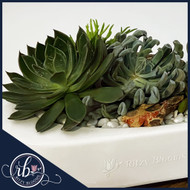
Live succulents are loved for their beauty and low-maintenance nature. Follow these simple tips to keep your succulent planter happy and healthy:
Light
- Bright, indirect sunlight is ideal.
- Place near a sunny window where your succulents can get at least 4–6 hours of light daily.
- If indoors with low natural light, consider using a grow light for extra support.
Watering
- Succulents prefer to dry out completely between waterings.
- Water about every 2–3 weeks, depending on light, humidity, and temperature.
- How to check: Stick your finger into the soil about an inch—if it feels dry, it's time to water.
- Pour water slowly at the base of the plants, avoiding the leaves.
- Never let the soil stay soggy. Succulents are sensitive to overwatering.
Pro Tip:
For best results, if your succulent is in a nursery pot set inside a decorative container, try this simple method:
- Lift the nursery pot from the decorative pot before watering.
- Pour a little water over the soil—take care to keep the leaves dry.
- Allow the water to fully drain out of the bottom before placing the nursery pot back.
- After a few hours, check for excess water collected in the decorative pot and pour it away if needed.
Adding a layer of gravel or sand to the bottom of your decorative pot can also help with drainage and keep your succulents happy.
Soil: The Root of Happy Succulents
- Succulents thrive in fast-draining soil—think desert, not rainforest!
- Steer clear of standard potting mix, which tends to hold too much moisture.
- Instead, opt for a specialty cactus or succulent mix, readily available at most garden centers.
- If you’re feeling crafty, you can make your own by blending regular potting soil with coarse sand or perlite (about 2 parts soil to 1 part sand/perlite).
- This lets roots breathe and reduces the risk of soggy soil, which succulents definitely do not appreciate.
- When repotting, choose a container with drainage holes and loosen any packed roots before settling your succulent into its new home.
Temperature & Environment
- Ideal indoor temperature: 65–80°F (18–27°C)
- Keep away from cold drafts, heating vents, or AC units.
- Avoid placing in bathrooms or other humid areas—succulents thrive in dry air.
General Tips
- Remove any dead leaves or dried petals to keep your arrangement looking fresh.
- If a succulent outgrows the planter, gently re-pot it into a slightly larger container. Look for signs like roots peeking out of the drainage holes; they’re letting you know it’s time for more space. To repot, carefully squeeze the sides of the pot to loosen the soil, then tip out the plant and gently brush away any excess dirt from the roots. Nestle your succulent into its new home, adding a bit of fresh cactus soil (or a mix of potting soil and sand) around the roots for good drainage. Avoid regular potting soil, as it tends to hold too much moisture. A quick top-up of dry soil will help secure the plant and keep it looking tidy.
- Fertilize lightly during spring and summer (optional) once a month with a diluted cactus fertilizer.
Common Issues to Avoid
-
Overwatering is the most common issue. When in doubt, wait it out. A good rule of thumb is to water just a little at a time when the soil is completely dry. If you accidentally overdo it, watch for signs like little blisters, white patches on the leaves, or rot forming. Catch it early and let the soil dry out thoroughly. Sometimes, you can reverse the damage.
-
Stretched or leggy growth means the plant needs more light.
-
Mushy leaves usually indicate too much water; wrinkled leaves mean it's too dry.