
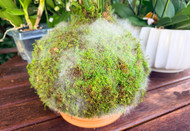
If you’ve recently purchased or created a kokedama and noticed a soft, white, cotton-like fuzz forming on the moss, don’t worry. This is a natural and common occurrence, especially in humid environments.
What Is the White Fuzz?
The white fuzz you’re seeing is harmless fungal mycelium, which is the early growth stage of a naturally occurring fungus. It develops when organic materials, like moss, are exposed to moisture and limited airflow.
Fungal spores are always present in the air, and under the right conditions, they can briefly become visible.
Why Does It Happen?
Kokedamas create a beautiful, natural environment, but they can also trap moisture. The combination of:
-
Humidity
-
Organic moss material
-
Limited air circulation
can encourage temporary fungal growth.
This is especially common when using preserved moss, which can retain moisture differently than live moss.
Is It Harmful?
No. In most cases, this white fuzz is completely harmless to both your plant and your home.
It’s primarily a surface-level occurrence and does not indicate that your plant is unhealthy.
What Should I Do?
If you notice the fuzz:
-
Gently wipe or brush it off with your hand or a soft cloth
-
Allow the kokedama to dry slightly between waterings
-
Place it in an area with good air circulation and indirect light
In many cases, once removed, it does not return.
How to Prevent It
To minimize the chances of it coming back:
-
Avoid overwatering
-
Ensure your kokedama isn’t constantly damp
-
Keep it in a well-ventilated space
-
Provide bright, indirect sunlight
A Natural Part of Organic Design
Because kokedamas are made with natural materials, small changes like this can happen. It’s part of working with living, organic elements and does not take away from the beauty or health of your plant.
If you ever have questions about your kokedama, feel free to reach out. We’re always here to help you enjoy your plant with confidence.